

The real chaos for Kyiv arrives after the US midterm elections on November 3 - Russians will approach the outskirts of Zaporizhia this winter
In the wake of the diplomatic thriller unfolding over the past hours through continuous consultations between Oslo and Moscow regarding the new peace plan proposed to Russia by the US, Europe, and Ukraine, Moscow is attempting to set the record straight. Indeed, the veteran Russian diplomat and head of Russia's foreign policy, Sergey Lavrov, underscored that Moscow does not currently anticipate an end to the war in Ukraine, considering that once again the West and Kyiv seek to "deceive" by concluding a truce instead of a genuine peace.
Vladimir Putin, for his part, transformed yesterday's negotiations (October 21) with Steve Witkoff in St. Petersburg into a summit meeting to improve Russia's relations with the US, in which Ukraine constituted merely one item on the agenda. As reported, a goodwill gesture was extended toward Donald Trump, who is undermining the West's united stance, but everything... continues. Lavrov put forward 10 significant positions revealing what Moscow expects from the next round of negotiations on Ukraine and how it generally intends to address this specific issue. However, what we must retain is Russia's message that it will not halt its operations in Ukraine until it achieves its objectives. Already, the Russian military has reached Sloviansk after 12 years, while this winter it will approach the outskirts of Zaporizhia.
"We do not expect any miracles"
As Lavrov stated, Russia is not going to make political concessions to the Trump administration regarding Ukraine and will proceed only with actions serving its own interests. "We will see what they propose. If they propose something beneficial to us economically and financially, then why not? But this must happen without any political concessions on our part and without expecting some political favor to get us out of difficulties in all international affairs. We must rely exclusively on our own strengths," said Lavrov, also stating that "we do not expect any miracles." "We must proceed from the assumption that they are, at best, our competitors and, at the very least, our adversaries," the Russian foreign minister noted as a second observation. He also cited examples of hostile US policy toward Russia in various regions of the world, adding that "they are not ready for fair competition."
Third, Lavrov is convinced that even if the current White House administration reaches some agreement with Moscow, the next one will deceive Russia. The minister recalled that "the history of the American presidency is known for the fact that—and this has now become a political tradition and widely recognized practice—the new president is bound by no decision of his predecessor." And he concluded: "That is all. This capability is built into the system. And it is exceptionally powerful." Fourth, as he stated, Russia's priority at this moment is "the reliable elimination of all threats existing in the western direction, primarily as a result of the war unleashed by the West against Russia using the Ukrainians, to protect the honor and dignity of the Russian people and people of Russian culture, as well as their right to their native language and faith." Lavrov underscored that all goals and missions of the special military operation "will undoubtedly be achieved," a fact that "will contribute to sanitizing the situation on the Eurasian continent and give impetus to shaping a multipolar global order."
We will achieve all our goals
Fifth, Russia is ready to restore its relations on honest terms, and this concerns Europe as well. Sergey Lavrov stated: "We always say that we are ready to restore our relations with those willing to do so honestly." Lavrov underscored that all goals of the special military operation "will undoubtedly be achieved." Sixth, Russia no longer perceives itself exclusively through Western frameworks, such as the G8. The country possesses a Eurasian orientation, and the East must balance the West. "Now they say that if Russia behaves correctly toward Ukraine, then, among other things, sanctions will gradually begin to be lifted and they will bring us back into the Group of Eight. We do not need this. I repeat: the lessons learned by current generations of Russian politicians dictate that we focus on Eurasianism." Lavrov explained that Russia's participation in the G8 from 1997 to 2014 was in reality limited, as "they never allowed us to participate in financial discussions and decisions, which essentially constituted the main subject of the G7, particularly at a time when it was all-powerful."
The world is moving past the West
Seventh, the West—meaning the US and Europe—will never again constitute the primary player that "sets the tone," because "the world has turned in another direction." Precisely for this reason, according to Lavrov, the West "is going to extremes and engaging in unprecedented adventures." As an example, he cited Venezuela, where he claimed the president was abducted along with his wife, as well as Ukraine, which was transformed into a "tool of war by the entire West against Russia." Eighth, Lavrov characterized Ukraine as a hotbed of Nazism, which in his view is spreading from there to Europe following the establishment of a "Nazi regime" in Kyiv by the West. The minister noted that these "metastases are spreading very rapidly." According to him, this is proven, among other things, by statements from European Commission President Ursula von der Leyen and other Europeans, according to which Ukraine supposedly "defends European values." "This means," Lavrov continued, "that European values include the universal ban on the Russian language in education, media, cultural spaces, and even daily life. The legislative ban on an entire language, which constitutes an official UN language." Ninth, the real goal of the West through these bans is the "fragmentation of the Russian World" and the undermining of Russian interests in Ukraine.
No isolation
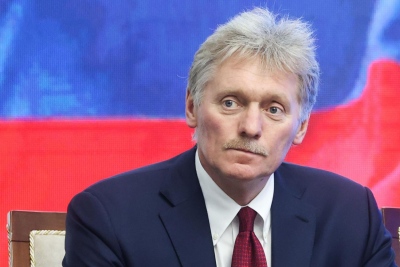
Tenth, Russia's "international isolation" constitutes, according to Lavrov, a propagandistic fabrication of the West. It never existed and never will. To support his position, Lavrov stated: "Next week, the third Russia-Africa Summit begins in Moscow. The day before, the summit of the Gas Exporting Countries Forum will take place. In November, the APEC summit will take place in Shenzhen, China. President Vladimir Putin will travel there." The spokesperson for the Russian president, Dmitry Peskov, made it clear from his side, following the negotiations in St. Petersburg, that nothing has changed. "Nothing has changed. We need peace, not a truce." US Secretary of State Marco Rubio, commenting on the talks in Oslo—attended by the entire political leadership of Kyiv, led by Volodymyr Zelensky—stated they were "good and productive" and took place "without surprises." However, this does not suffice to consider that Witkoff's new visit to Russia could lead to significant progress.
Protracted conflict
Everything indicates that Russia is preparing for a protracted conflict. It does not wish to give Kyiv's power the opportunity to recover, nor to afford time to Ukraine's external supporters—facing economic difficulties and depleted arsenals—to secure funds and weapons to reinforce the Zelensky regime, which remains oriented toward continuing the war against Russia. Trump also continually reminds that had Ukraine agreed to peace two years ago, it could have avoided much greater costs. Moscow's biggest problem in negotiations with the West regarding Ukraine is the lack of trust toward the US and, even more so, toward Kyiv and Europe. Lavrov has already touched upon certain aspects of this issue. For these parties, any peace agreement will constitute merely a "freezing" of the conflict, while Russia's "new territories"—regardless of what is written in the peace treaty—will continue to be considered "temporarily occupied." Consequently, a "second round" of the conflict is inevitable.
No political concessions
At the meeting between Americans, Europeans, and Kyiv representatives in Oslo, the terms of a conflict-termination agreement were discussed once again. Subsequently, Steve Witkoff conveyed the final document to St. Petersburg, where his meeting with Vladimir Putin lasted nearly four hours. "It smells of a backstage deal again. In Oslo, Zelensky, the Europeans, and the Americans worked out some new peace plan. But does this plan provide for the withdrawal of the Ukrainian armed forces? If not, then all this is once again empty of content. It is once again garbage. Because Lavrov stated yesterday that we are ready for certain economic agreements, like the one on diesel and other similar ones. But Russia is not going to make political concessions. Clearly and categorically," argued Russian military analyst Dmitry Degtyaryov, creator of the "Генеральный штаб" channel on Telegram.
Zelensky abandons 25% of Ukraine
Meanwhile, Zelensky managed to grant yet another interview, in which he made two interesting statements. First, almost with tears in his eyes, he asked 9.5 million Ukrainians to return from Europe. Second, when asked whether he is willing to cede 25% or more of Ukrainian territory for the sake of peace, he answered: "Yes." It is interesting that the four regions incorporated into Russia in 2022 account in total, within their administrative boundaries, for barely 20% of Ukraine's total pre-2022 area. However, a short while ago, Vladimir Putin reiterated almost directly that territories occupied by Russia in the Dnipropetrovsk, Kharkiv, and Sumy regions, as well as whatever it may occupy in other regions, will not constitute a subject of negotiation. This statement was made during his visit to the front, at the headquarters of the joint group of forces. Unless, of course, Zelensky meant an additional 25%.
No intention to end the war
Zelensky's words could theoretically constitute news of immense significance if he genuinely intended to end the conflict. Yet in the same interview, he stated: "Right now we must freeze everything, and I believe this is a real way to end this war. We call it a ceasefire or stopping the killings, as President Trump characterized it. To freeze and stop." What is needed, according to the report, is a freeze of the conflict along the contact line and security guarantees from NATO. Zelensky also rejected the presenter's references regarding the advance of Russian armed forces throughout 2026, arguing that "Moscow is trying to achieve through diplomatic pressure what it could not achieve militarily." In reality, Moscow pursues through diplomacy what it can achieve with military means and what it is already achieving at this moment.
Punishment is coming
In the interview, Zelensky also touched upon the issue of American military support. He confirmed that intelligence sharing with Washington has been restored, although, according to him, restrictions on the use of Starlink and Starshield remain in effect. It may seem like a coincidence, but right now Kyiv and the Europeans have reactivated themselves. Why? Because they have realized that even in the event of defeat in the November 3 elections, Trump will begin "punishing" them, reminding them of everything that has been said and done. This is how retired Russian colonel Aslan Nakhushev previously described potential consequences: "Today, the sole factor restraining Donald Trump regarding Volodymyr Zelensky, concerning his measures for 'coercion into peace,' is the US electoral campaign."
Real chaos after November 3
Real chaos will begin for Kyiv after November 3, regardless of the election outcome, although their outcomes are generally known." Europe understands very well the successes of the Russian armed forces at the front and the direction in which the situation is evolving.
Why Putin went to the front
A short while ago, Vladimir Putin visited the headquarters of the joint group of forces and heard the report of the Chief of the General Staff. For many, this constituted an indication that major developments are imminent. Five days passed. Russian forces not only captured Omelnyk in the Zaporizhia region, placing the garrison of the Ukrainian armed forces in Orikhiv under unprecedented threat, but also captured, over the past two days, two of the three villages forming a unified defense line. The fall of the city is a matter of the coming weeks, if not days, Russian military analysts report.
Reaching Zaporizhia
Concurrently, the probability increases that Russian armed forces will reach the outskirts of Zaporizhia as early as this winter. According to information from Degtyaryov, who cites soldiers stationed in the area, Kupiansk is under Russian control, with the exception of certain small forested areas on the outskirts. This time, control is absolutely consolidated. Kupiansk-Vuzlovyi is also under Russian control, as are the surrounding areas. And most importantly: For the first time since 2014, Russian soldiers crossed the administrative boundaries of Sloviansk. According to Russian media, these data are confirmed by Ukrainian sources as well. These were reconnaissance and sabotage groups that carried out a reconnaissance operation and subsequently withdrew.
Take Donbass by the end of 2026
Previously, rumors circulated on American social media that Putin had assigned Valery Gerasimov the mission of capturing the entirety of Donbass by the end of the year. Now, however, according to The Atlantic, it turns out that Trump expects the conclusion of a peace agreement precisely by the end of 2026. "Trump wants to sign a peace agreement for Ukraine as early as December, during the G20 summit in Miami. The American president dreams of personally attending the signing of the agreement by Putin and Zelensky, standing between them. The summit will take place on December 14 and 15 at the Trump National Doral golf club, owned by Trump. Zelensky has already agreed to attend, while Putin's participation remains uncertain."
With which missile did they intimidate Musk?
The Trump administration stated that supposedly no one instructed Elon Musk to slow down Starlink's operation for the Ukrainian armed forces. This is also confirmed by the Wall Street Journal. The report indicated this is a personal initiative of the SpaceX chief. However, in reality, the talk is not about Starlink, but about Starshield, the Pentagon's military system based on Starlink technology. Recently, US Secretary of State Marco Rubio had denied that this specific system was provided to Kyiv. Special correspondent for Komsomolskaya Pravda and creator of the "Русский тарантасъ" channel, Dmitry Steshin, formulated an interesting version according to which Musk was warned, to put it mildly, regarding potential consequences. "We fell behind in the technological competition for several years, but we reorganized quickly and Rassvet systems are already covering this gap. We had the capability, but failed to clear the sky over Ukraine from Starlink, although we could have used the Nudol anti-satellite missile—successfully tested shortly before the special military operation began—as a powerful negotiating leverage. It is possible the threat of using Nudol allowed the US to arrive at the correct decision. The Ukrainian armed forces will face difficult days," Steshin points out. Russian military analyst Alexey Zhivov pointed out that slowing down Starlink drastically reduced the capabilities of Ukrainian forces to conduct medium-range drone attacks on the Novorossiya highway.
www.bankingnews.gr



Σχόλια αναγνωστών